Monday, 21 November 2011

Sam Cooke


Sam Cooke’s last words were “Lady, you shot me.” The lady in question was Bertha Franklin, manager of a motel in LA. On the night of November 10, 1964, Cooke picked up a seedy girl in a bar, and took her for a long drive to an appropriately seedy motel. They checked in at 2.30am the following morning. Forty minutes later, Cooke was dead.


Apparently, Cooke tried to rape the girl he picked up, who ran away when Cooke went to the bathroom. She called the police to say she’d been kidnapped and didn’t know where she was. Back at the motel, Cooke had forced his way into the Mrs Franklin’s office, and apparently started attacking her.
Franklin told the coroner’s jury:
He started working on the door with his shoulder... it wasn’t long before he was in. When he came in he went straight to the kitchen, then he looked in the bathroom. He grabbed both my arms and started twisting... we got into a tussle...He fell to the floor. He fell on top of me. I started kicking. I was scratching, kicking, biting, everything. I got up... he came to me. I pushed him back again, then I grabbed the pistol and started shooting... he wasn’t too far, very close range.
He said ‘lady, you shot me!’ He ran into me again. I started fighting again. I grabbed the stick. The first time I hit him, it broke.


The killing was judged ‘justifiable homicide’, though some were not convinced. Jet magazine wrote at the time “Close associates, too numerous to mention, have declared that Sam Cooke was not the sort of man to kidnap a girl, force her into sex against her will, or attack a middle-age woman.”

This is very probably true, though Cooke did have a reputation as a serial womaniser: “Sam never remained faithful to any of his wives and girlfriends... One night, he even took the wife of one of his tourmates in a hotel bathroom for a quick interlude, while he was in the room.”


Samuel Cook was born on January 22, 1931 in Clarksdale, Mississippi, one of eight children of a baptist minister. He started out as a gospel singer, and found fame with the Soul Stirrers.

Cooke’s best known song with the Stirrers was Touch the Hem of His Garment, which was hurredly written on the way to a recording session on February 2nd, 1956. Their manager was getting worried about their lack of material, so Cooke said “Well, hand me the Bible. He skimmed through it, and said: “I got one. Here it is right here”


Cooke wrote the song right there, and they recorded it that day. The verse which inspired it was presumably Matthew 14, 35-6:
And when the men of that place had knowledge of him, they sent out into all that country round about, and brought unto him all that were diseased; And besought him that they might only touch the hem of his garment: and as many as touched were made perfectly whole.

By December 1956, Cooke was getting restless for mainstream success. He “thought he should be making pop records. Yet in the world of gospel, even the suggestion of such was heresy.” He released a solo pop song, Loveable, under the pseudonym Dale Cook. People recognised his distinctive voice, though, and he was kicked out of the Soul Stirrers.


Cooke brought out a string of big hits in the next few years. Though quite a big star, he was still subject to the usual racism of the era. Gale Contemporary Black Biography describes one bizarre incident in New Jersey:
“Cooke and the band had stopped at a roadside restaurant, and the waitress there refused to take their order; when someone put "You Send Me" on the jukebox she continued to ignore them while swooning at the jukebox to her favorite song, completely unaware who the men were.”

Cooke can be seen as an important figure in the civil rights movement. He was “a groundbreaking independent black-music capitalist. He owned his own record label (Sar/Derby), music publishing concern (Kags Music), and management firm.”


He also wrote and recorded A Change is Gonna Come, which became an anthem for the civil rights movement. It would also have kickstarted his career, but he died shortly before it was released.


What to hear: Portrait of a Legend, which may be the greatest ‘greatest hits’ compilation of all time. Apparently his studio albums are quite patchy.
Why: By using a gospel style to sing about non-religious topics, Cooke helped invent soul. He was also one of the genre’s finest singers.

Tuesday, 8 November 2011

Erik Satie


Apparently Mozart was a fan of toilet humour. In 1782, he wrote a piece for his friends called Leck mich im Arsch, which means “Lick me in the arse”. He’s also said to have written the piece Leck mir den Arsch fein recht schön sauber (Lick my ass right well and clean). The score can be seen here.

The great French composer Erik Satie also favoured unusual song titles, such as:
Three Pear-shaped pieces
Dried up Embryos
Three Real Flabby Preludes (for a dog)
Pieces to make you run away
Bureaucratic Sonata


Satie also gave odd instructions to performers, such as ‘wonder about yourself’, ‘don’t make your fingers blush’, ‘[play] from the top of your back teeth’ and ‘be clairvoyant’. He developed a reputation for eccentricity, with Stravinsky saying “he was certainly the oddest person I have ever known”

Satie “never washed but cleaned himself with a pumice stone instead’. Once he bought seven identical grey suits and matching hats. He “spent many hours in the company of local street urchins, enjoying their chatter and enthralling them with stories he made up”.

Alfred Eric Satie was born in Honfleur, on the northern coast of France, on May 17th, 1866. “He was an autodidact who spoke seven languages fluently”, but was a lazy student. He didn’t make the grades at the Paris Conservatoire, and was expelled in 1882. Four years later he joined the army, but “he found military life distasteful and intentionally courted illness to relieve himself of duty”. He caught bronchitis and was discharged in 1887.


He published his first work in the late 1880s, but had little success, and, in 1905, went back to music school for three years. This gave his work ‘a more academic and rigorous quality’, but he’d already developed a distinctive style before joining the school.

Satie described his style as ‘furniture music’, a kind of pleasant background noise: “it serves the same purpose as light, heat, and all forms of comfort.” His relaxing, slow, repetitive tunes can be seen as early examples of minimalism or ambient music, decades ahead of their time.


What to hear: Any of his piano works
Why: He was way ahead of his time. That doesn’t mean much on its own, as Ornette Coleman was way ahead of his time, and his music is horrible. Satie’s piano works actually sound nice.

Saturday, 5 November 2011

Ravi Shankar


At the Concert for Bangladesh in 1971, Ravi Shankar and Ali Akbar Khan got on stage, and started tuning their instruments. When they’d finished, the audience started applauding, thinking that was the performance. Shankar said: “If you like our tuning so much, I hope you will enjoy the playing more.”

Shankar was never comfortable playing for hippies, as he hated their drug use:
“during certain periods, especially during the 1960s, Indian music incorrectly became synonymous with the use of drugs to alter one’s state of mind. This enraged me. In fact I would express this sentiment at the beginning of each of my concerts”


He also disliked playing at Woodstock for this reason. At the 1967 Monterey Pop Festival, Shankar was upset to see Jimi Hendrix burn his guitar. This was sacrilege to Shankar, who follows “the traditional teaching that sound is God”, and music is a form of worship.

Robindra Shankar was born on April 7, 1920, in Benares, a city on the banks of the Ganges. Aged ten, he moved to Paris to join his brother’s dance group. As Life Magazine put it:
He dressed then in Bond Street suits and, he says, ‘was thoroughly spoiled’. Then he met Allaubdin Khan, a master sitarist, who challenged him to become his disciple. Shankar shaved off his hair, gave away his suits, and travelled to a tiny Indian village to study with the guru. For seven and a half years he practiced 12 hours a day until his fingers were torn and bloody from the wire strings. He became a virtuoso and eventually married the guru’s daughter.

Life also quotes him as saying ‘one lifetime is not enough to learn to play’, and claims that Shankar spent two years learning to hold the sitar properly.


Shankar hit fame in 1966 when he spent six weeks teaching George Harrison. Harrison had hoped to have lessons in secret, so checked into a hotel in Bombay under a false name, and grew a moustache. Still he was recognised, and a crowd gathered outside the hotel. He and Shankar retreated to a houseboat in Kashmir, where Harrison learned the basics of the sitar. News of Harrison’s lessons, and his decision to include sitar on some Beatles songs, brought Indian music to popular attention, and made Shannkar a star.

In 1971, he used this fame to raise funds for Bangladeshi refugees, co-organising the Concert for Bangladesh with George Harrison. 


Shankar was Oscar nominated for his soundtrack to Gandhi in 1982, has won three Grammys, was given an honoury CBE in 2001, and served for six years in the Indian upper house of parliament. Now aged 91, he is still performing.

What to hear: Three Ragas, The Sounds of India, In London and his Philip Glass collaboration, Passages
Why: In terms of technical ability, Shankar may well be the best musician in the world.

Friday, 4 November 2011

Copied album titles, no.1

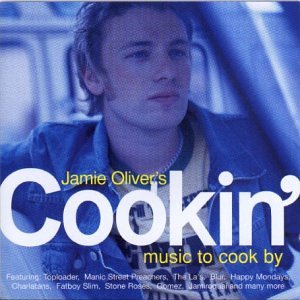
Cookin', Jamie Oliver, 2000


Cookin with the Miles Davis Quintet, 1957

Jamie Oliver's Cookin' is a compilation of songs Oliver likes to listen to while cooking, by bands like Toploader, Blur, the Happy Monday and the Stone Roses. In short, the worst bands of all time. It also includes one track by Jamie Oliver's own band, Scarlet Division. Oliver is the drummer.


Cookin' with the Miles Davis Quintet is a classic album from perhaps Miles' best period. The quintet, which included John Coltrane and Paul Chambers, also released the albums Workin', Relaxin' and Steamin', which are all fantastic. Here's their take on My Funny Valentine, which could only be improved by including Jamie Oliver on drums.


Wednesday, 2 November 2011

Mark Kozelek


Van Morrison is a messy eater. I know this because I was once down the pub with a professional interviewer, who said that Van turned up to their meeting with curry stains all down his lapels.

This guy also interviewed Leonard Cohen; apparently the meeting turned into an all night drinking session at a hotel bar, where Cohen was really funny. It’s weird to think of him as having a sense of humour. Cohen’s lyrics are hardly a laugh riot.


Apparently, one of the most depressing musicians of the modern era is also pretty funny. Mark Kozelek sings long, mournful guitar ballads, which are appropriately described as ‘sadcore’. He even managed to make turn AC/DC’s song You Aint Got a Hold On Me, which is about fellatio, into a romantic lament.
However, when interviewed, Kozelek gives short, funny answers. Asked about a clip of him laughing on tour, he says:
When you're eating stale nuts from a vending machine on Thanksgiving Day and watching "Planes, Trains and Automobiles" in Portuguese, you can either laugh about it or cry.
On his collaboration with Death Cab For Cutie’s Ben Gibbard:
I've known Ben for a while. We met at a music festival in Spain years ago, where we both got food poisoning. We've been friends ever since.
On touring:
Happiness to me is to not have to listen to a drummer going WHACK WHACK WHACK on his snare drum for a half hour at sound check.
On flying:
People ask me about my guitar all of the time. I just tell them it’s a gift for someone. I hate trying to explain my living to someone on a plane. It feels like the people around me are thinking, “yeah, right. if this guy is so popular, what’s he doing sitting back here in coach?”


Though Kozelek often gives interviews, the details of his early life still aren’t really known. People just don’t ask him about it. Instead, they ask the same questions over and over:  One that always comes up is – Why did you let Gap and Gears of War use your songs in adverts? Isn’t it selling out?
I don't think of it in those terms. Honestly, I just look at the zeros on the end of offers and decide from there. I need to eat and pay bills and taxes like everyone else. If along the way Gears of War helps me reach a wider audience, it beats mailing thousand of CDs to college radio stations that no one listens to anymore.


We do know that Kozelek was born in Ohio in 1967, and started playing guitar after seeing a relative playing a John Denver song. He was a lazy student, and often skipped school to play guitar. In his late teens, he moved to Atlanta, Georgia with his band to try and find success. The band broke up, and he ended up doing odd jobs. He then formed a new band, Red House Painters. He borrowed the name from a friend “who was in a painting crew in Tennessee called The International league of Revolutionary House Painters”.
They had sudden success:
“I literally went from working front desk at the Chelsea Motor Inn to a week later, a record company in England wiring money to my bank account, saying "Make an album." I felt a lot of pressure.”


After six albums, Red House Painters broke up, and he started releasing solo records, and set up a new band, Sun Kil Moon.

If you haven’t heard of Kozelek, you might recognise him from some brief film appearances. He played a bassist in the film Almost Famous, and has a brief cameo in Vanilla Sky:


What to Hear: April by Sun Kil Moon, Songs for a Blue Guitar by Red House Painters, and their first self-titled album
Why: His songs are long, meandering and depressing, but also surprisingly enjoyable