Monday, 21 November 2011

Sam Cooke


Sam Cooke’s last words were “Lady, you shot me.” The lady in question was Bertha Franklin, manager of a motel in LA. On the night of November 10, 1964, Cooke picked up a seedy girl in a bar, and took her for a long drive to an appropriately seedy motel. They checked in at 2.30am the following morning. Forty minutes later, Cooke was dead.


Apparently, Cooke tried to rape the girl he picked up, who ran away when Cooke went to the bathroom. She called the police to say she’d been kidnapped and didn’t know where she was. Back at the motel, Cooke had forced his way into the Mrs Franklin’s office, and apparently started attacking her.
Franklin told the coroner’s jury:
He started working on the door with his shoulder... it wasn’t long before he was in. When he came in he went straight to the kitchen, then he looked in the bathroom. He grabbed both my arms and started twisting... we got into a tussle...He fell to the floor. He fell on top of me. I started kicking. I was scratching, kicking, biting, everything. I got up... he came to me. I pushed him back again, then I grabbed the pistol and started shooting... he wasn’t too far, very close range.
He said ‘lady, you shot me!’ He ran into me again. I started fighting again. I grabbed the stick. The first time I hit him, it broke.


The killing was judged ‘justifiable homicide’, though some were not convinced. Jet magazine wrote at the time “Close associates, too numerous to mention, have declared that Sam Cooke was not the sort of man to kidnap a girl, force her into sex against her will, or attack a middle-age woman.”

This is very probably true, though Cooke did have a reputation as a serial womaniser: “Sam never remained faithful to any of his wives and girlfriends... One night, he even took the wife of one of his tourmates in a hotel bathroom for a quick interlude, while he was in the room.”


Samuel Cook was born on January 22, 1931 in Clarksdale, Mississippi, one of eight children of a baptist minister. He started out as a gospel singer, and found fame with the Soul Stirrers.

Cooke’s best known song with the Stirrers was Touch the Hem of His Garment, which was hurredly written on the way to a recording session on February 2nd, 1956. Their manager was getting worried about their lack of material, so Cooke said “Well, hand me the Bible. He skimmed through it, and said: “I got one. Here it is right here”


Cooke wrote the song right there, and they recorded it that day. The verse which inspired it was presumably Matthew 14, 35-6:
And when the men of that place had knowledge of him, they sent out into all that country round about, and brought unto him all that were diseased; And besought him that they might only touch the hem of his garment: and as many as touched were made perfectly whole.

By December 1956, Cooke was getting restless for mainstream success. He “thought he should be making pop records. Yet in the world of gospel, even the suggestion of such was heresy.” He released a solo pop song, Loveable, under the pseudonym Dale Cook. People recognised his distinctive voice, though, and he was kicked out of the Soul Stirrers.


Cooke brought out a string of big hits in the next few years. Though quite a big star, he was still subject to the usual racism of the era. Gale Contemporary Black Biography describes one bizarre incident in New Jersey:
“Cooke and the band had stopped at a roadside restaurant, and the waitress there refused to take their order; when someone put "You Send Me" on the jukebox she continued to ignore them while swooning at the jukebox to her favorite song, completely unaware who the men were.”

Cooke can be seen as an important figure in the civil rights movement. He was “a groundbreaking independent black-music capitalist. He owned his own record label (Sar/Derby), music publishing concern (Kags Music), and management firm.”


He also wrote and recorded A Change is Gonna Come, which became an anthem for the civil rights movement. It would also have kickstarted his career, but he died shortly before it was released.


What to hear: Portrait of a Legend, which may be the greatest ‘greatest hits’ compilation of all time. Apparently his studio albums are quite patchy.
Why: By using a gospel style to sing about non-religious topics, Cooke helped invent soul. He was also one of the genre’s finest singers.

Tuesday, 8 November 2011

Erik Satie


Apparently Mozart was a fan of toilet humour. In 1782, he wrote a piece for his friends called Leck mich im Arsch, which means “Lick me in the arse”. He’s also said to have written the piece Leck mir den Arsch fein recht schön sauber (Lick my ass right well and clean). The score can be seen here.

The great French composer Erik Satie also favoured unusual song titles, such as:
Three Pear-shaped pieces
Dried up Embryos
Three Real Flabby Preludes (for a dog)
Pieces to make you run away
Bureaucratic Sonata


Satie also gave odd instructions to performers, such as ‘wonder about yourself’, ‘don’t make your fingers blush’, ‘[play] from the top of your back teeth’ and ‘be clairvoyant’. He developed a reputation for eccentricity, with Stravinsky saying “he was certainly the oddest person I have ever known”

Satie “never washed but cleaned himself with a pumice stone instead’. Once he bought seven identical grey suits and matching hats. He “spent many hours in the company of local street urchins, enjoying their chatter and enthralling them with stories he made up”.

Alfred Eric Satie was born in Honfleur, on the northern coast of France, on May 17th, 1866. “He was an autodidact who spoke seven languages fluently”, but was a lazy student. He didn’t make the grades at the Paris Conservatoire, and was expelled in 1882. Four years later he joined the army, but “he found military life distasteful and intentionally courted illness to relieve himself of duty”. He caught bronchitis and was discharged in 1887.


He published his first work in the late 1880s, but had little success, and, in 1905, went back to music school for three years. This gave his work ‘a more academic and rigorous quality’, but he’d already developed a distinctive style before joining the school.

Satie described his style as ‘furniture music’, a kind of pleasant background noise: “it serves the same purpose as light, heat, and all forms of comfort.” His relaxing, slow, repetitive tunes can be seen as early examples of minimalism or ambient music, decades ahead of their time.


What to hear: Any of his piano works
Why: He was way ahead of his time. That doesn’t mean much on its own, as Ornette Coleman was way ahead of his time, and his music is horrible. Satie’s piano works actually sound nice.

Saturday, 5 November 2011

Ravi Shankar


At the Concert for Bangladesh in 1971, Ravi Shankar and Ali Akbar Khan got on stage, and started tuning their instruments. When they’d finished, the audience started applauding, thinking that was the performance. Shankar said: “If you like our tuning so much, I hope you will enjoy the playing more.”

Shankar was never comfortable playing for hippies, as he hated their drug use:
“during certain periods, especially during the 1960s, Indian music incorrectly became synonymous with the use of drugs to alter one’s state of mind. This enraged me. In fact I would express this sentiment at the beginning of each of my concerts”


He also disliked playing at Woodstock for this reason. At the 1967 Monterey Pop Festival, Shankar was upset to see Jimi Hendrix burn his guitar. This was sacrilege to Shankar, who follows “the traditional teaching that sound is God”, and music is a form of worship.

Robindra Shankar was born on April 7, 1920, in Benares, a city on the banks of the Ganges. Aged ten, he moved to Paris to join his brother’s dance group. As Life Magazine put it:
He dressed then in Bond Street suits and, he says, ‘was thoroughly spoiled’. Then he met Allaubdin Khan, a master sitarist, who challenged him to become his disciple. Shankar shaved off his hair, gave away his suits, and travelled to a tiny Indian village to study with the guru. For seven and a half years he practiced 12 hours a day until his fingers were torn and bloody from the wire strings. He became a virtuoso and eventually married the guru’s daughter.

Life also quotes him as saying ‘one lifetime is not enough to learn to play’, and claims that Shankar spent two years learning to hold the sitar properly.


Shankar hit fame in 1966 when he spent six weeks teaching George Harrison. Harrison had hoped to have lessons in secret, so checked into a hotel in Bombay under a false name, and grew a moustache. Still he was recognised, and a crowd gathered outside the hotel. He and Shankar retreated to a houseboat in Kashmir, where Harrison learned the basics of the sitar. News of Harrison’s lessons, and his decision to include sitar on some Beatles songs, brought Indian music to popular attention, and made Shannkar a star.

In 1971, he used this fame to raise funds for Bangladeshi refugees, co-organising the Concert for Bangladesh with George Harrison. 


Shankar was Oscar nominated for his soundtrack to Gandhi in 1982, has won three Grammys, was given an honoury CBE in 2001, and served for six years in the Indian upper house of parliament. Now aged 91, he is still performing.

What to hear: Three Ragas, The Sounds of India, In London and his Philip Glass collaboration, Passages
Why: In terms of technical ability, Shankar may well be the best musician in the world.

Friday, 4 November 2011

Copied album titles, no.1

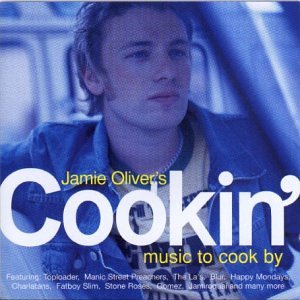
Cookin', Jamie Oliver, 2000


Cookin with the Miles Davis Quintet, 1957

Jamie Oliver's Cookin' is a compilation of songs Oliver likes to listen to while cooking, by bands like Toploader, Blur, the Happy Monday and the Stone Roses. In short, the worst bands of all time. It also includes one track by Jamie Oliver's own band, Scarlet Division. Oliver is the drummer.


Cookin' with the Miles Davis Quintet is a classic album from perhaps Miles' best period. The quintet, which included John Coltrane and Paul Chambers, also released the albums Workin', Relaxin' and Steamin', which are all fantastic. Here's their take on My Funny Valentine, which could only be improved by including Jamie Oliver on drums.


Wednesday, 2 November 2011

Mark Kozelek


Van Morrison is a messy eater. I know this because I was once down the pub with a professional interviewer, who said that Van turned up to their meeting with curry stains all down his lapels.

This guy also interviewed Leonard Cohen; apparently the meeting turned into an all night drinking session at a hotel bar, where Cohen was really funny. It’s weird to think of him as having a sense of humour. Cohen’s lyrics are hardly a laugh riot.


Apparently, one of the most depressing musicians of the modern era is also pretty funny. Mark Kozelek sings long, mournful guitar ballads, which are appropriately described as ‘sadcore’. He even managed to make turn AC/DC’s song You Aint Got a Hold On Me, which is about fellatio, into a romantic lament.
However, when interviewed, Kozelek gives short, funny answers. Asked about a clip of him laughing on tour, he says:
When you're eating stale nuts from a vending machine on Thanksgiving Day and watching "Planes, Trains and Automobiles" in Portuguese, you can either laugh about it or cry.
On his collaboration with Death Cab For Cutie’s Ben Gibbard:
I've known Ben for a while. We met at a music festival in Spain years ago, where we both got food poisoning. We've been friends ever since.
On touring:
Happiness to me is to not have to listen to a drummer going WHACK WHACK WHACK on his snare drum for a half hour at sound check.
On flying:
People ask me about my guitar all of the time. I just tell them it’s a gift for someone. I hate trying to explain my living to someone on a plane. It feels like the people around me are thinking, “yeah, right. if this guy is so popular, what’s he doing sitting back here in coach?”


Though Kozelek often gives interviews, the details of his early life still aren’t really known. People just don’t ask him about it. Instead, they ask the same questions over and over:  One that always comes up is – Why did you let Gap and Gears of War use your songs in adverts? Isn’t it selling out?
I don't think of it in those terms. Honestly, I just look at the zeros on the end of offers and decide from there. I need to eat and pay bills and taxes like everyone else. If along the way Gears of War helps me reach a wider audience, it beats mailing thousand of CDs to college radio stations that no one listens to anymore.


We do know that Kozelek was born in Ohio in 1967, and started playing guitar after seeing a relative playing a John Denver song. He was a lazy student, and often skipped school to play guitar. In his late teens, he moved to Atlanta, Georgia with his band to try and find success. The band broke up, and he ended up doing odd jobs. He then formed a new band, Red House Painters. He borrowed the name from a friend “who was in a painting crew in Tennessee called The International league of Revolutionary House Painters”.
They had sudden success:
“I literally went from working front desk at the Chelsea Motor Inn to a week later, a record company in England wiring money to my bank account, saying "Make an album." I felt a lot of pressure.”


After six albums, Red House Painters broke up, and he started releasing solo records, and set up a new band, Sun Kil Moon.

If you haven’t heard of Kozelek, you might recognise him from some brief film appearances. He played a bassist in the film Almost Famous, and has a brief cameo in Vanilla Sky:


What to Hear: April by Sun Kil Moon, Songs for a Blue Guitar by Red House Painters, and their first self-titled album
Why: His songs are long, meandering and depressing, but also surprisingly enjoyable

Wednesday, 26 October 2011

Charles Mingus


One Sunday afternoon at New York’s Village Vanguard club, some of the crowd were absorbed in chat, completely ignoring the band. The bandleader, Charles Mingus, complained, but they didn’t hear. He compromised: “Okay. We’re not going to fight you anymore. We’ll play four bars, and then you’ll all talk four bars. Okay?”

Mingus did just that, leaving four bars of silence after each four bars of music. The talkers didn’t notice, though others in the audience were laughing.


Another time, he brought props to the Vanguard. When the audience ignored him, Mingus got out a newspaper and gave it to the pianist. He gave a chess set to the drummer and sax player. They started playing. Mingus got out a portable TV for himself, plugged it in, and started watching.

At a different club, when people didn’t listen, his band ordered food and sat and ate for half an hour on stage.


Charles Mingus was not always known for his sense of humour, though. He became the only musician to ever be fired by Duke Ellington, after starting a fight with another player on stage. At a tribute gig to a dead jazzman, “he broke up the show by slamming the piano lid down, nearly smashing his pianist's hands, and then punched trombonist Jimmy Knepper in the mouth”.

Knepper carried on working with Mingus until 1962, when the pair got into an argument at Mingus’s apartment, and Mingus punched him in the mouth, breaking one of his front teeth. This permanently damaged Knepper’s playing ability, reducing his upper range by an octave.


Knepper pressed charges, and Mingus was given a suspended sentence for third-degree assault. Mingus claimed in his defence that Knepper had called him a ‘nigger’, an argument the black judge didn’t find convincing.

Mingus could seem race obsessed at times; he would compare black musicians to sharecroppers, saying “musicians are as Jim-Crowed as any black motherfucker on the street.” He set up his own record label in 1952 to escape this, but it failed.


Once a white guy came to Mingus for music lessons:
“So, the white boy comes to steal the black man’s music and make a lot of money!”
“No, I just came to steal your music... I don’t care about the money!”
Mingus didn’t laugh.

His stream-of-consciousness autobiography, narrated by Mingus in the third person, suggests that his apparent race obsession was the result of racist bullying he suffered as a child. If nothing else, the book is worth reading for this phrase: “Losing his girl and becoming a nigger in one day was too much for him”.
He was describing one of his many boyhood romances. Aged nine, a white girl invited him to meet at her house after school. “He crept up to the back door and called her name”, and two boys, “not much older but far larger” came out, shouting:
“Get out of here nigger. Betty’s our girl and we don’t want any niggers hanging around.”


This was the first time he’d been called that. He was aware of the term, but thought he was too light-skinned for it to be relevant. He ran home near tears, but was stopped by three white men:
“Here boy, what you doing over this way”
“Going home from school”
“Let’s kill the little nigger. Sneaking over here where he don’t belong, trying to rape our sister.”

The men shoved him in a car, and took him to the canal, where they started knocking him about. Luckily, two tough black guys came along and beat the men up, scaring two off and knocking the other out.
Mingus’s autobiography is also notable for its long, explicit sex scenes, including one where he sleeps with 26 prostitutes in two and a half hours. He was a notorious womaniser, and once openly had two girlfriends at once.


Mingus was born on a military base in Arizona on April 22, 1922, and raised in California. He started playing trombone aged six, but then switched to cello. He later switched to bass, apparently because the school band needed a bassist. Other sources claim that he switched because a local musician told his father that ‘at least a black man can get employment with a bass’.

Either way, he became known as a bass prodigy, and moved to New York in 1951, where he got to play with stars like Charlie Parker, Dizzy Gillespie and Miles Davis.


Mingus developed a reputation as a confusing character: “a warm, engaging man when at ease with his friends, he could quickly become bellicose and meanacing when he felt threatened”. Time wrote bluntly that “he broods, he gulps red wine by the gallon, he brawls in bars”.

Mingus used to see a psychotherapist regularly, and when the therapist cancelled two appointments in a row, Mingus checked himself into Bellevue Psychiatric Hospital. After spending six and a half hours persuading the gate guard to let him in, Mingus spent his whole brief stay trying to get out, partly because he was threatened with a lobotomy on the first day.


To lobotomise Charles Mingus would have been unforgivable. He was one of the most creative jazz musicians of all time, and a superb composer. Some of his albums are full of catchy, uplifting tunes, while others are concept pieces, experimenting with free jazz and eclectic influences. His finest work is The Black Saint and The Sinner Lady, a six-part ballet released in 1963.

Mingus was diagnosed with Lou Gehrig’s disease in 1977, and he quickly became unable to play bass, though he would still compose from his wheelchair, singing into a tape recorder. He died in 1979.


What to hear.... Mingus Ah Um, Blues and Roots, The Black Saint and the Sinner Lady
Why.... his take on jazz is quirky and brilliant. Listen out for his shouts of joy during good solos.

Monday, 24 October 2011

Terry Riley


November 4, 1964. San Francisco. Gig goers are given a choice: Thelonious Monk at the Jazz Workshop, or the premiere of a new work by a little-known avant-garde composer.

Anyone in their right mind would have gone to see Monk. He was a huge star by that point, while the other composer hadn’t done much except a series of pretentious tape loops using ‘found sounds’.


For another piece, this composer hadn’t written any music at all; he just gave the musicians these instructions:
“The performer takes any object(s) such as a piece of paper, cardboard, plastic etc. and places it on his ear(s). He then produces the sound by rubbing, scratching, tapping or tearing it or simply dragging it across his ear, he also may just hold it there, it may be placed in counterpoint with any other piece of sound source.”

Anyone who missed Monk’s show to see the Terry Riley’s piece In C might well have regretted it. It was another fairly pretentious experimental piece. The pianist is told to play a steady pulse of C notes, while the rest of the musicians are given a set of 53 fragments of music, some of which are only one note long. They’re told to repeat each part however many times they want, then move on to the next one, while trying to ‘stay within two or three patterns of each other’.


The piece is confusing, and certainly not catchy, but that first performance of In C is now considered the birth of minimalism, perhaps the most important style of modern classical music.

One of the performers that night was Steve Reich, who would go on to write far better minimalist pieces than Terry Riley, and Riley himself made better music than In C, but that was his most important work. As he later said:

Although repetition is a major force in music it was never used in this way before. So, essentially my contribution was to introduce repetition into Western music as the main ingredient without any melody over it, without anything just repeated patterns, musical patterns.


Terrence Mitchell Riley was born in Colfax, California, on 24 June 1935. His father was in the Marine Corps, and fought in WWII’s Pacific campaign, so Riley was mostly brought up by his mother’s parents. He had piano lessons as a boy, but only started composing while at university, ‘merely to see if he had any talent for it’. He then took a composition course at Berkeley, where he met fellow minimalist pioneer La Monte Young.

Riley spent the early 60s travelling round Europe, where he gigged as a pianist. He also played piano with a travelling circus, providing musical accompaniment for anything from contortionists to “men shooting cigars out of women’s mouths with a bow-and-arrow”.


At about this time, he started giving epic live concerts, playing from 10pm till dawn:
People brought their whole families and they had their sleeping bags and hammocks...Throughout the evening I would be recording these long saxophone delays and about four hours into the concert, if I wanted to take a break I would just play back the saxophone. And a lot of people didn’t even wake up to know the difference because a lot of people just slept all night.

After In C, his work became more accessible, and in 1969 he released his most popular album, A Rainbow in Curved Air.

Rather than following up this success, though, he took a break from composing, and went to India to study with the singer Pran Nath.


At about this time Riley started using Indian-style scales. While the Western chromatic scale has all notes a semitone apart, Indian scales space out notes according to a mathematical ratio. With a specially tuned keyboard, Riley recorded two of his best albums; Persian Surgery Dervishes (1972) and Shri Camel (1980).

Now 75, Riley is still playing live, though he may never get round to performing the conceptual piece La Monte Young once designed for him: “I was supposed to push a grand piano into a wall and keep pushing until the wall fell down.”

What to hear: A Rainbow in Curved Air, Shri Camel, Persian Surgery Dervishes
Why: As well as inventing minimalism, his tune A Rainbow in Curved Air inspired the intro to the Who classic Baba O’Riley


Saturday, 22 October 2011

Thelonious Monk


Thelonious Sphere Monk was once a guest at a Colombia University music class. The lecturer asked him to “play some of your weird chords for the class.”
“What do you mean, weird? They're perfectly logical”, Monk replied.

Monk’s quirky-yet-logical music was ignored for years, as it sounded discordant, and people “thought he lacked technique”. However, he was a very skilled pianist, and played like that on purpose.


Monk apparently developed his style in the early 40s, while he was resident pianist at Minton’s Playhouse in Harlem. The club hosted a Monday night jam session, attended by many big names, like Dizzy Gillespie, who explained that he and Monk intentionally worked out a difficult way of playing:

“There were always some cats showing up there who couldn't blow at all and would take six or seven choruses to prove it. So on afternoons before a session, Thelonious Monk and I began to work out some complex variations on chords and the like, and we used them at night to scare away the no‑talent guys. After a while we got more and more interested in what we were doing as music, and, as we began to explore, our music evolved."

Drummer Kenny Clarke backed up this story, though pianist Mary-Lou Williams disagreed. She claimed that Monk was worried about having his ideas stolen by white people, saying: “We're going to create something they can't steal because they can't play it.”


Monk was born in North Carolina on October 10, 1917, but his family moved to New York when he was four. Not long after, he started playing piano, and taught himself to read music by sitting in on his sister’s piano lessons, looking over her shoulder. He had two years of classical training himself, and then started playing in bands aged 13.

The Apollo Theater in Harlem held an annual amateur music contest every week: the young Monk was eventually banned from taking part, as he won too often.


Monk showed signs of eccentricity ‘even early in his career’, arriving late for gigs, falling asleep at the piano, or retreating to his bedroom ‘for two weeks at a time’. A 1964 Time article on Monk, called him ‘The Lonliest Monk’, and said:

Every day is a brand-new pharmaceutical event for Monk: alcohol, Dexedrine, sleeping potions, whatever is at hand, charge through his bloodstream in baffling combinations. Predictably, Monk is highly unpredictable. When gay, he is gentle and blithe to such a degree that he takes to dancing on the sidewalks, buying extravagant gifts for anyone who comes to mind, playing his heart out. One day last fall he swept into his brother's apartment to dance before a full-length mirror... he left without a word...At such times, he seems a very happy man.
 At other times he appears merely mad. He has periods of acute disconnection in which he falls totally mute. He stays up for days on end, prowling around desperately in his rooms, troubling his friends, playing the piano as if jazz were a wearying curse. In Boston Monk once wandered around the airport until the police picked him up and took him to Grafton State Hospital for a week's observation. He was quickly released without strings, and though the experience persuaded him never to go out on the road alone again, he now tells it as a certification of his sanity. ‘I can't be crazy’, he says with conviction. ‘‘cause they had me in one of those places and they let me go.’

His father was not so lucky: Thelonious Monk Senior spent the last 22 years of his life in the North Carolina State Hospital for the Colored Insane.


Thelonious Junior suffered bipolar disorder, which was presumably the cause of much of his odd behaviour. However, as his most recent biographer notes: “He liked to entertain, to clown, to do the unusual, and he was often quite conscious and deliberate.” Monk’s bizarre dancing, presumably an example of clowning, was described in the 1964 Time article. During live shows, when other players were soloing, ‘he would rise from the piano to perform his Monkish dance’:

It is always the same. His feet stir in a soft shuffle, spinning him slowly in small circles. His head rolls back until hat brim meets collar, while with both hands he twists his goatee into a sharp black scabbard. His eyes are hooded with an abstract sleepiness, his lips are pursed in a meditative O. His cultists may crowd the room, but when he moves among them, no one risks speaking: he is absorbed in a fragile trance, and his three sidemen play on while he dances alone in the darkness. At the last cry of the saxophone, he dashes to the piano and his hands strike the keys in a cat's pounce.

In 1951, the year his first album came out, Monk was banned from performing in New York. He and pianist Bud Powell were arrested with a packet of heroin, which was clearly Powell’s, as Monk didn’t use drugs. However, Monk refused to incriminate his friend, and took full blame, serving 60 days in prison. His performer’s license (‘cabaret card’) was also taken away.


After six years, his influential friend Baroness Pannonica de Koenigswarter intervened on his behalf, and Monk finally got his card back. Police soon confiscated it again, after an arbitrary arrest. Time explained:

Monk, the Baroness, and Monk's present saxophonist were driving through Delaware for a week's work in Baltimore. Monk stopped at a motel for a drink of water, and when he lingered in his imposing manner, the manager called the police. Monk was back in the Bentley when the cops arrived, and he held fast to the steering wheel when they tried to pull him out - on the Monkish ground that he had done nothing to deserve their attention. Even though the Baroness shrieked to watch out for his hands, the furious cops gave his knuckles such a beating that he bears the lumps to this day.

The Baroness and Monk were lifelong friends, and for the last six years of his life he lived in her house, and she looked after him as his health deteriorated.


Monk played his last concert in 1976. That year, Colombia University’s student radio station ran a programme about him, during which the presenter said “Monk, playing the wrong notes on the piano, is able to create this kind of music...” Monk called the university switchboard, asking them to pass a message on to the host: “The piano ain't got no wrong notes.”

What to hear: Genius of Modern Music vol.1, Brilliant Corners, Alone in San Francisco and Straight, No Chaser
Why: He was way ahead of his time. Monk pioneered bebop but it took years for his genius to be recognised.

Thursday, 20 October 2011

Roy Harper


After releasing his masterpiece, Stormcock, in 1971, Roy Harper became seriously ill with Osler-Weber-Rendu disease. Though this is genetic, Harper’s publicist told the papers that he’d become ill after giving a sheep the kiss of life.

"That same day, it was headline news in Australia and New Zealand. A big story there, given that the sheep outnumber the people about four to one. Then it hits the broadsheets here. The next thing I know, I've been kissing a sheep. Then I'm president of the north-west Lancashire sheep shaggers' association."

The illness was hardly a laughing matter, though. At first he was given seven years to live. However, “the doctor came back to my bedside a fortnight later and said ‘I think I'm wrong’. It's been that sort of situation ever since.”


It stopped Harper recording for four years, and his music was never as good afterwards. Sales were poor, and, after some bad business deals, Harper “ended up owing my house to the bank. Barclays bank, Hayes, Middlesex, to be exact.”

Harper was born in Manchester on June 12, 1941, and his mother died a few weeks later. He was raised by his father and stepmother, a keen Jehova’s Witness. Harper grew to hate organised religion, and authority figures in general, becoming a beatnik teen: “When I was 15 I was wearing sandals and corduroys, Guernsey, striped pullover, a beard that was hardly there, shades and a beret, and the goal was hanging out.”


It may be hard to imagine, but at 15 this hippyish character joined the RAF. He hated the rigid discipline, and suffered a nervous breakdown, claiming insanity to get early release.

Harper was then committed to a mental institution, where he was given electric shock treatment. He managed to escape, in his pyjamas, and was homeless for a while before being put in prison for ‘trying to climb the clock tower at St. Pancras Station and sundry other misadventures’.

After prison, he spent a year busking around Europe and North Africa. Back in England in the mid-60s, he played on the folk club circuit, where, he says, ''I spent most of my time being thrown out of folk clubs for not being Nana Mouskouri."


He was picked up by indie label Strike in 1966, and for the next five years, he released a string of his best albums, culminating in Stormcock.

That album’s shortest song is 7 minutes 23 seconds. His record company, EMI, was ‘really angry’ about the completely un-commercial record; ‘they dismissed it out of hand’. Harper has said:

I’ll never ever forget the meeting with the marketing guy, and we walked in, into the meeting and the first thing he said was, “Before I begin, I’d just like to say that there is no money left in the marketing budget for this album.”

“I was absolutely distraught” he later said: “I knew that I'd made something really special and it was completely trashed, totally ignored.” EMI didn’t even bother releasing the album in the US.


Even with good marketing, Stormcock probably wouldn’t have sold that well. Harper’s ‘epic progressive acoustic’ sound is not for everyone, and he has always refused to be pushed in more commercial directions. One can only imagine what EMI thought when they first heard his song I Hate the White Man. The cover of his 1975 album HQ is a fairly blasphemous image of him walking on water; EMI said the cover would seriously harm American sales, but he ‘refused point blank’ to change it.

Unsurprisingly, Harper has never had a hit single, and has spent only ten weeks on the British album charts during his 33-album, 44-year career. As The Rough Guide to Rock explains: “both studio and stage often saw him spliffed to the gills or in willfully anti-commercial mode, and he’s never progressed much beyond a cult following.”


Most people who have vaguely heard of Harper know him as the subject of the Led Zeppelin song Hats off to (Roy) Harper, or as the singer of Pink Floyd’s Have a Cigar, though his own music is well worth exploring.

What to hear... Stormcock, Counter Culture
Why... As one critic said, he’s the only musician in the genre of epic acoustic prog. 

Tuesday, 18 October 2011

Horace Silver


The jazz world owes a lot to a little girl called Dorothy from Norwalk, Connecticut. She lived next door to Horace Silver, and was about his age. Silver liked her, and used to copy what she did: “Whenever Dorothy got a bike or a sled or a pair of skates, I’d ask my dad to get the same for me.” One day she started having piano lessons, so Silver also asked his father for lessons, though he’d previously had little interest in learning an instrument.

The family got hold of an old piano ‘some rich white folks’ were chucking out, and Silver began lessons. The boy got bored of practicing, but his father wouldn’t let him quit, saying: “No, you’re not going to quit. You asked for this, and you got it, and now you’re going to stick with it. One day you’ll thank me for this”.
Silver only realised he wanted to be a musician years later, at age 11. He saw a band playing at an amusement park, and thought ‘that’s for me’. He later wrote: ‘I made a vow that night that music would be my life’.


He kept the vow, and is still performing, aged 83. Though he recorded from 1950 to 1998, he’s best known for his string of fantastic albums on the Blue Note label, including Finger Poppin, Blowin the Blues Away, and Song for my Father. It was in these recordings that he helped create ‘hard bop’, the jazz style which uses influences from blues, gospel and RnB.

Silver was born on September 2, 1928, the son of John T. Silva, a Cape Verdean who had ‘worked his way to the United States on a boat’. His mother was a half-Irish half-black woman who worked as a domestic servant to local rich people, including Boris Karloff and Bette Davis. She used to come back from work with food ‘left over from some white lady’s bridge party’.


Silver’s mother died suddenly of a stroke when he was nine. Raised by his father and great-aunt, he had a difficult childhood. His house had rats all year round, and bats during the summer: ‘I often woke up in the middle of the night after they had bitten me and sucked my blood’. Perhaps because of this, he was often unwell: “I was a skinny, rather weak kid, and I caught all the childhood diseases – chicken pox, mumps, measles, you name it.”

While his mother was still alive, two of Silver’s uncles illegally migrated from Cape Verde, and came to live in the family’s attic. One night, ‘in the wee hours, there came a knock on our kitchen door’. A voice said: ‘this is the FBI – open up’. They did open the door, and the two uncles were caught and deported.


As well as these bizarre experiences, he suffered a more common problem: racism. Once he bumped into some friends who were due to play a club gig that night, and said he could join in. He practiced all day, but when he got to the club, he was kicked out by a policeman before he could start playing. The club didn’t allow black people.

New York was more accepting, and when Silver moved there around 1951, he got to play with established artists, and was quickly picked up by Blue Note. He recorded over 40 albums for them, and many more on other labels; he’s also ‘one of very few jazz musicians to record almost exclusively original material’. In short, he’s written a lot of music. Asked about this, he said:

“I wake up in the morning with music in my head a lot of times. I won't say every morning, but I wake up in the morning sometimes with eight bars in my head and I just go to the piano. It's almost like taking dictation.”


What to hear: Song for my Father, Blowin the Blues Away, Six Pieces of Silver, Finger Poppin
Why: Known as ‘the grandpop of hard bop’, Silver is one of the key jazz innovators.

Saturday, 17 September 2011

Captain Beefheart


California, 1968. The tyrannical Captain Beefheart keeps his Magic Band for eight months in a house in the San Fernando Valley, LA. The windows are blacked out. One of them is allowed to leave once a week to get food. They spend 12 hours a day rehearsing a new album. If Beefheart thinks one of them isn’t good enough, he puts them ‘in the barrel’, psychologically abusing them until they break down. (Later, he threw his drummer down some stairs after he failed to ‘play a strawberry’.)

By the time the band got into the studio, they knew the material so well they recorded the 80-minute album in four and a half hours. However, when Trout Mask Replica was released, many people were confused. It sounded like a tuneless, out-of-time jam session. However, Beefheart had carefully worked out these arrangements, and this was exactly what he wanted them to sound like.


Trout Mask is what many people will remember Beefheart for, but he also made some much more listenable music. His first album, Safe as Milk, is a very pleasant half-hour of blues rock.


Similarly, his albums The Spotlight Kid and Clear Spot are fantastic, and only a little odd.


His later efforts were even less surreal, and not very good. After releasing Unconditionally Guaranteed, he advised buyers to ‘take copies back for a refund’. Beefheart gave up making music in 1982, as he was hoping to be taken seriously as a painter.

He always had an interest in other types of art, and was sculpting from the age of four. Born Don Glen Vliet in California, 1941, he was a childhood friend of Frank Zappa, who described Beefheart’s childhood thus: “part of the time Don was helping out by taking over [his father’s] bread truck route, driving up to Mojave, and the rest of the time he would just sit at home and listen to rythym and blues records and scream at his mother to get him a Pepsi.”

Before founding the Magic Band in 1964, Beefheart worked as a door-to-door vacuum cleaner salesman. He claimed to have tried to sell one to Aldous Huxley with the line: “Well I assure you sir, this thing sucks.” However, Beefheart made a lot of unlikely claims. For example, he said he taught his band how to play their own instruments, and recorded an album worth of material with Miles Davis.


Beefheart used to sign any contract put in front of him, without reading it. This meant that in the mid 70s, he was in a legal mess, and not allowed to record anything. Zappa helped Beefheart out by taking him on tour. During their shows, Beefheart sang a bit, but would mostly sit on stage drawing in his sketchbook.
By the time of his death last year, Beefheart had become well respected for his paintings. Fans of his music can’t have been at all surprised that his style of painting was very abstract.

What to hear... Trout Mask Replica, Safe as Milk, The Spotlight Kid, Clear Spot
Why... If you can bear to sit through his albums the first few times, you’ll be a lifelong fan


Thursday, 15 September 2011

A brief history of the blues


Mississippi, 1903. Musician WC Handy is waiting for a delayed train, and trying to sleep. He notices a man singing and playing guitar, using a knife to bar the frets. In a mournful style, he repeats the lyric: ‘Goin’ where the southern cross the dog’. It was an obscure reference to a railway crossing in Moorhead, Mississippi.


This is the first written record we have of the blues, though it is much older. The genre originated among southern slaves sometime in the 19th century. Though its early history is not known, it was clearly influenced by the West African tradition of musical storytellers (‘Griots’), and early African-American religious songs.

The blues style developed in plantation fields, as slaves sang to pass the time, motivate themselves, and express their feelings. These tunes had simple ‘call and response’ patterns, and were strongly rythmic, even though they had no instrumental backing.

Having ‘discovered’ the blues, WC Handy helped popularise it, publishing the first blues tune, Memphis Blues, in 1912. It was recorded two years later: 


However, Mamie Smith’s 1920 hit Crazy Blues is considered the first proper blues record:


This sold hundreds of thousands of copies, and encouraged other record labels to cash in on the genre. In the early years, labels would often give blues artists a jazzy backing band, and censor their lyrics. Fortunately, many legendary blues artists escaped this treatment, leaving a vast body of one-man-one-guitar blues masterpieces. Blind Willie McTell, Mississippi John Hurt, and Leadbelly are particularly memorable. Among the women, it’s Bessie Smith and Ma Rainey who stand out as early pioneers.


The next major development in blues was another move away from acoustic solo work. A group of bluesmen in Chicago, faced with noisy audiences, started playing electric guitar and using a backing band. Muddy Waters is generally credited with starting this movement with his 1948 hit I Just Can’t be Satisfied.


The guitar/bass/drums combination used by the Chicago bluesmen was borrowed by almost every major rock band, most of whom were heavily influenced by the blues. It has a good claim to being the most influential genre of all time.


The last word goes to George Carlin: White people have no business playing the blues ever, at all, under any circumstances. Ever, ever, ever. What the fuck to white people have to be blue about? Banana Republic ran out of khakis?... The espresso machine is jammed? ...Hootie and the Blowfish are breaking up?”